- Four bumblebee species have been classified as “Endangered”, two hoverfly species as “Vulnerable”, and one butterfly species has been added to Spain’s List of Wild Species under Special Protection.
- Entomologist Guillermo Cabezas, a Senior Research Support Technician at IMDEA Agua, played a key role in the team responsible for securing the inclusion of these insects in Spain’s national biodiversity protection frameworks.
Spain has taken a historic step towards insect pollinator conservation by extending legal protection to seven species found within its territory. Published on 19 October in the Official State Gazette (Boletín Oficial del Estado), the measure marks the first time that bumblebee and hoverfly species have been included in Spain’s national biodiversity protection frameworks.
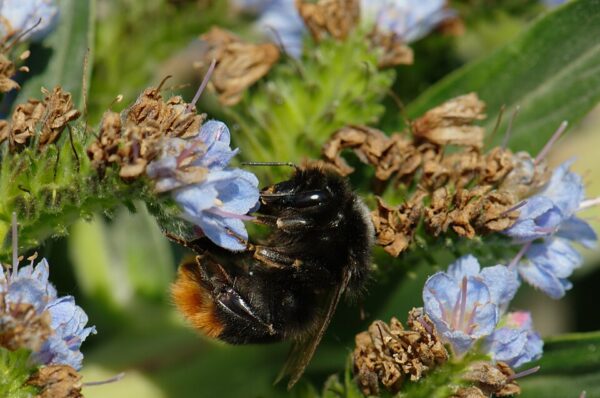
Four bumblebee species have been added to the Spanish Catalogue of Threatened Species under the category “Endangered”: Bombus confusus Schenck, Bombus cullumanus (Kirby), Bombus gerstaeckeri Morawitz and Bombus inexspectatus (Tkalců). These species are found in northern Spain and at high elevations.
Two hoverfly species have been classified as “Vulnerable”: Mallota dusmeti (Andreu) and Meligramma cingulata (Egger). These flies visit flowers during their adult stage, making them effective pollinators. They are also of considerable ecological importance due to the extraordinary diversity of lifestyles exhibited by the larval stages of different species.
Finally, the Alcon blue butterfly, Phengaris alcon (Denis & Schiffermüller), has been added to Spain’s List of Wild Species under Special Protection, formally recognising it as a protected species at the national level.
Bumblebees, hoverflies and other insect pollinators are essential for the reproduction of wild plants and the maintenance of biodiversity. Their ecological importance, together with their specific environmental requirements and, in many cases, restricted distributions, has highlighted the need for legal protection.
The inclusion of these species in the Catalogue and the List recognises the need to halt the decline affecting many of their populations as a result of habitat loss, climate change and other environmental pressures. This measure will help improve population monitoring, protect the habitats on which these species depend and promote conservation and recovery initiatives.
The process began four years ago and involved an intensive scientific, technical and administrative effort coordinated by Guillermo Cabezas (then at TRAGSATEC), Elena Bermejo, Marta Gómez and Marcos Cerra, in collaboration with technical staff from Spain’s Ministry for the Ecological Transition and the Demographic Challenge (MITECO).
The team included Concepción Ornosa (Complutense University of Madrid); Félix Torres (University of Salamanca); Santos Rojo, Celeste Pérez and Andrea Aracil (University of Alicante); and Yeray Monasterio and Ruth Escobés (ZERYNTHIA, the Spanish Association for the Protection of Butterflies and Their Habitats). Antonio Ricarte, from the CIBIO research centre at the University of Alicante, subsequently joined the team.
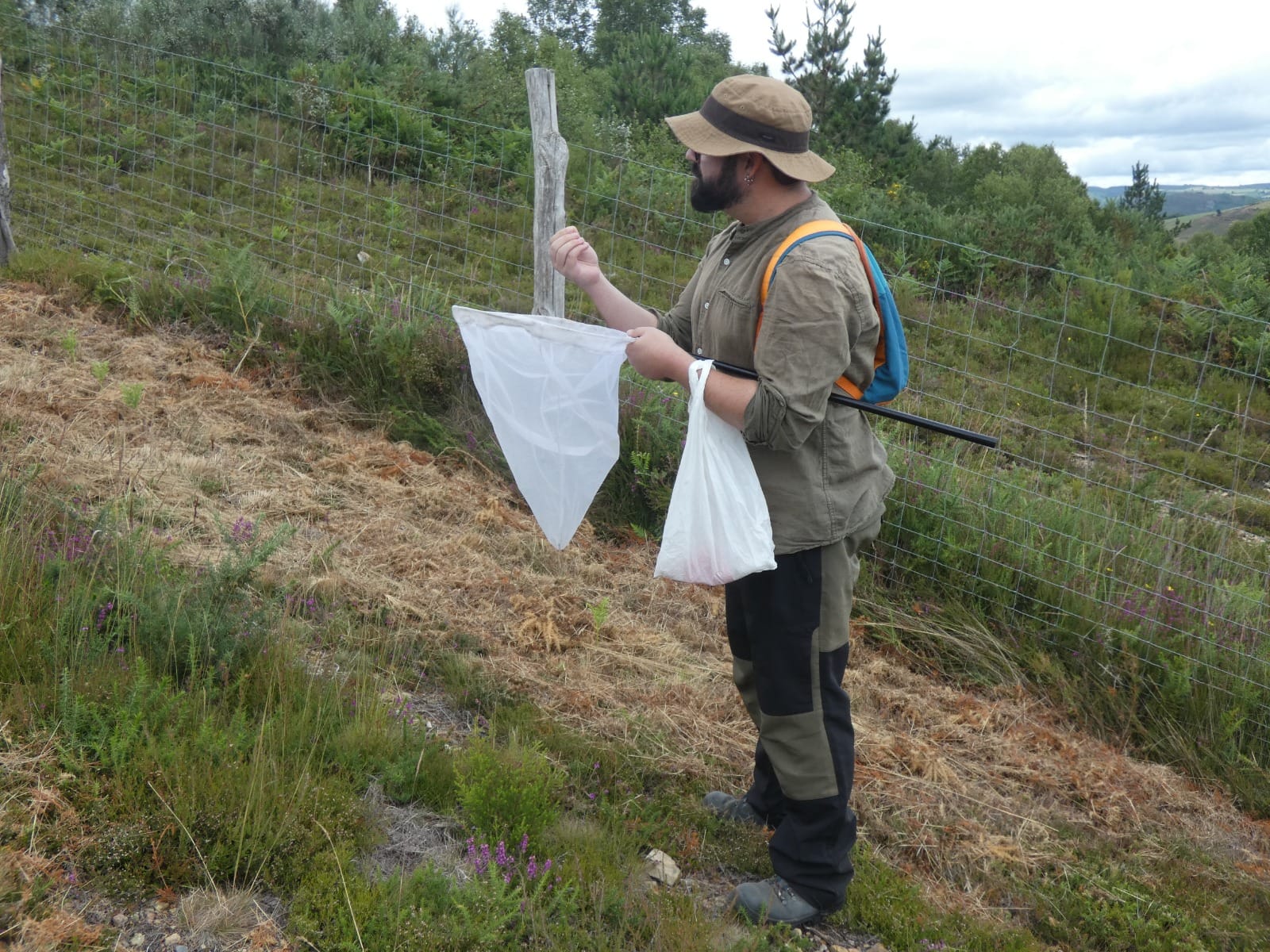
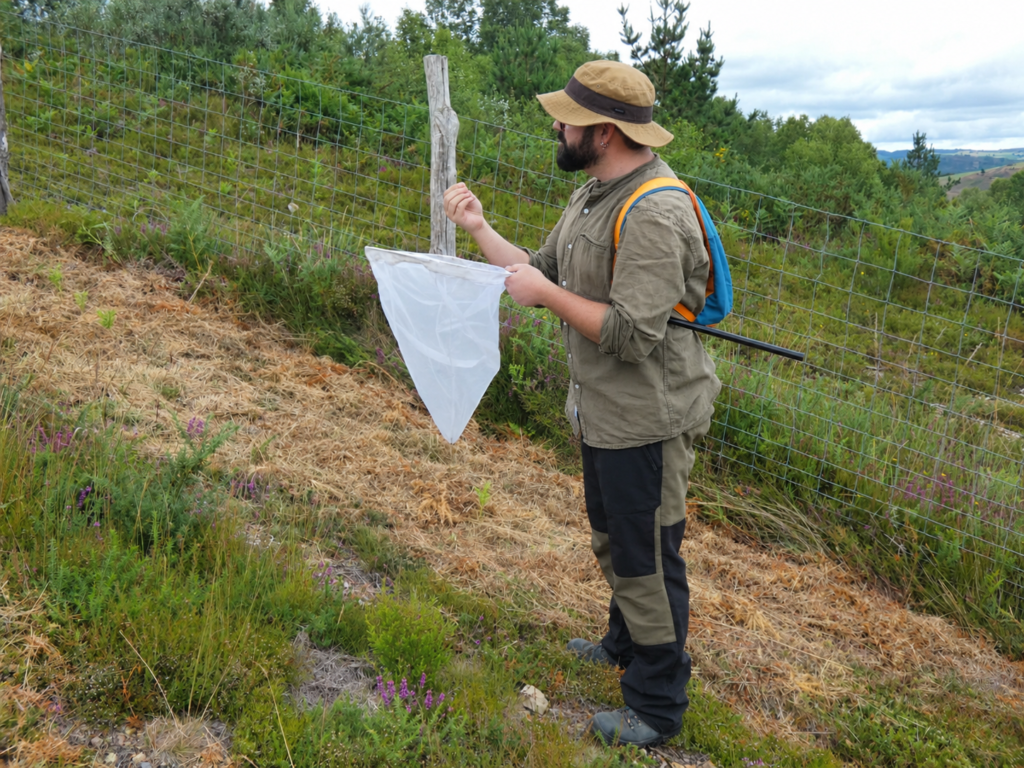
Image: Guillermo Cabezas carrying out field surveys in the Cantabrian Mountains
Guillermo Cabezas holds a PhD in Biology and specialises in applied entomology. After coordinating several pollinator conservation projects at TRAGSATEC for Spain’s Ministry for the Ecological Transition, he joined IMDEA Agua in 2025. He currently conducts research within the CyaNoServices project, funded through the European Horizon Europe Water4All Partnership. The project aims to protect freshwater ecosystems and biodiversity from the adverse impacts of harmful cyanobacterial blooms.